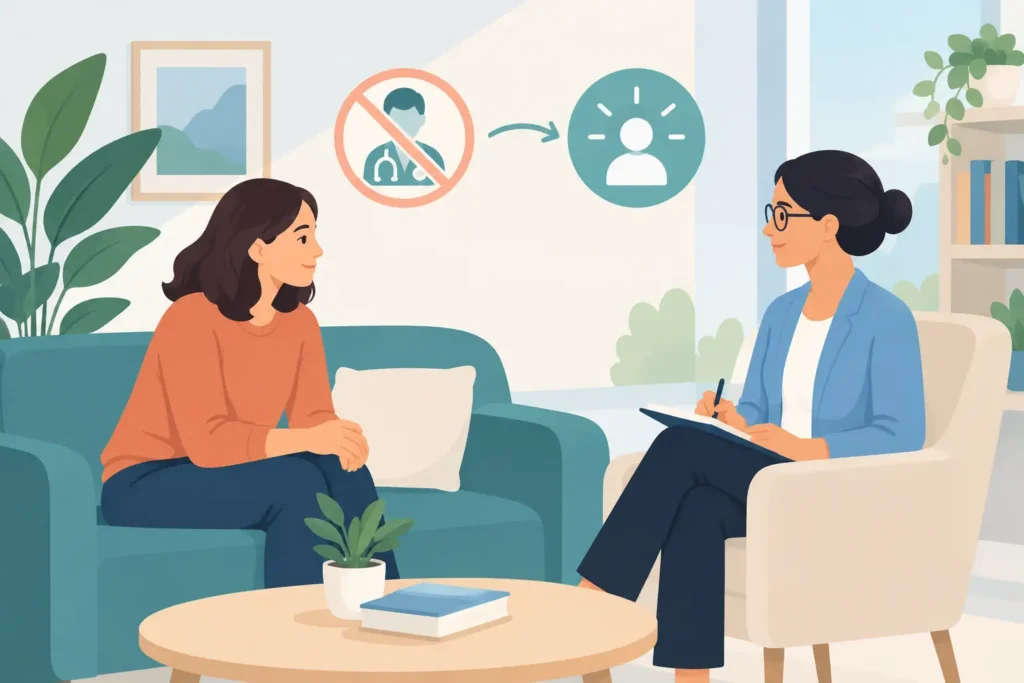

You may have thought about therapy at 10 p.m., after a hard day, while sitting in your car before heading home, or during a quiet moment when you finally had space to notice how heavy things felt. If that is where you are, the question is simple and real: can you start therapy online? Yes, you can, and for many people, that first online step makes care feel more approachable, private, and possible.
Starting therapy online is not a lesser version of support. It is a real path into care, and for many adults and families, it is the easiest way to begin. Virtual therapy can offer structure, connection, confidentiality, and guidance without adding unnecessary barriers. If you have been waiting for the right moment to reach out, this option can help you begin from wherever you are.
Can you start therapy online without already knowing what you need?
Yes. In fact, many people begin therapy online before they have the right words for what they are feeling. You do not need to arrive with a clear explanation, a formal diagnosis, or a perfect plan. You may simply know that stress feels harder to carry, your emotions feel closer to the surface, or your daily routine has become more difficult to manage.
A good online intake process is designed to meet you there. It helps you share what has been going on, what kind of support you are looking for, and any preferences you have about scheduling, communication, or care. From there, a behavioral health provider can help guide you toward the right next step.
That guidance matters. Some people are looking for ongoing therapy. Others want support with stress management, emotional wellness, life changes, or family concerns. When access to care is person-centered, you do not have to sort everything out on your own before asking for help.
What starting therapy online usually looks like
The first step is often simpler than people expect. Most providers begin with a confidential intake form or scheduling process where you share basic information and describe your needs. You may be asked about your availability, insurance or payment details, and whether you prefer virtual or in-person services.
After that, the provider reviews your information and helps match you with the appropriate service path. In some cases, you can schedule quickly. In others, a team member may follow up to clarify your needs and make sure the fit is right. Either way, the goal should be the same: helping you move from uncertainty to support with dignity and clarity.
Your first therapy session online is usually focused on understanding your goals, your current concerns, and your history in a way that feels supportive and respectful. You are not expected to tell your whole life story in one sitting. Think of it as the beginning of a working relationship, one built around trust, emotional safety, and practical care.
What you need to begin virtual therapy
You do not need a perfect home office or a complicated setup. Most people can start with a phone, tablet, or computer, a stable internet connection, and a private place where they can talk comfortably. Some people use headphones for extra privacy, especially if they live with family or roommates.
The more important part is choosing a setting where you can focus and feel at ease. That might be a bedroom with the door closed, a parked car in a quiet place, or another space where you can have a confidential conversation. The goal is not perfection. The goal is enough comfort and privacy to be present.
It also helps to approach the first session with a little openness. You do not need to prepare a speech, but it can be useful to think about what led you to seek support now, what feels most urgent, and what you hope might feel different over time.
Is online therapy as personal as in-person care?
For many people, yes. Therapy is built on connection, consistency, and feeling heard. That can happen through a screen just as meaningfully as it can in an office. Some clients even find it easier to open up from a familiar environment because they feel more grounded at home.
At the same time, preference matters. Some people appreciate the convenience of virtual care but still feel more comfortable meeting in person. Others like having both options available, depending on their schedule, transportation, childcare needs, or comfort level. Flexibility can make it easier to stay engaged in care over time.
This is where it helps to choose a provider that offers clear communication and respects your preferences. A supportive behavioral health team will not treat therapy as one-size-fits-all. They will help you find the format that supports your wellness best.
Privacy and confidence matter when you start therapy online
One of the biggest reasons people hesitate is concern about privacy. That concern is understandable. Therapy should feel protected, especially when you are sharing personal thoughts, family stress, or emotional challenges.
When you start therapy online, look for a provider that uses HIPAA-compliant communication and has a clear, professional intake process. That combination matters because it shows that care is designed to be both compassionate and secure. Privacy is not just a technical feature. It is part of what helps people feel safe enough to begin.
Confidence also grows when the process is clear. You should know how to schedule, what kind of platform will be used, what forms may be needed, and who to contact if you have questions. A welcoming process can reduce stress before the first session even starts.
When online therapy is especially helpful
Online therapy can be a strong fit for people with busy schedules, caregiving responsibilities, transportation concerns, or a desire for more privacy while beginning care. It can also feel more manageable for first-time therapy seekers who want a gentler entry point.
For adults and families in communities like Chicago, Des Plaines, Rosemont, Elmwood Park, Harwood Heights, and Norridge, virtual therapy can make support easier to reach without adding extra travel time to an already full day. That convenience can be the difference between putting off care and actually starting.
Still, the best format depends on your needs and your comfort. Some people want the accessibility of online sessions. Others prefer in-person connection. Both are valid. What matters most is beginning with a provider that listens and helps you move toward the right kind of support.
How to know if you are ready to start therapy online
You do not need a dramatic moment to be ready. Readiness often looks quieter than people expect. It can sound like, I want more support than I have right now. It can feel like wanting more steadiness, more coping tools, or more space to process what is happening in your life.
If you have been thinking about therapy more than once, that is often enough reason to explore it. If you want support but are unsure where to begin, online therapy can be a practical first step because it lowers the effort needed to get started. You can move from wondering to connecting with care in a way that feels structured and manageable.
A person-centered provider will meet you with respect, not pressure. They will help you understand your options, answer your questions clearly, and make the process feel human.
Choosing the right online therapy provider
Not every therapy experience starts the same way, and that is why the provider matters. Look for care that feels approachable, organized, and grounded in dignity. The best starting point is often a provider that offers confidential intake, clear next steps, and support that reflects your actual life rather than a generic checklist.
This is especially important if you are new to behavioral health services. You deserve care that explains the process in simple terms and helps you feel supported from the first contact forward. At Ready 2 Heal, that kind of guided access is part of what makes beginning feel easier for people who want care without extra gatekeeping.
If you are still asking, can you start therapy online, the answer remains yes. You can start with a question, a form, a call, or a quiet decision that today is the day you make room for your wellness. Sometimes that first small step is how resilience begins to feel real again.