
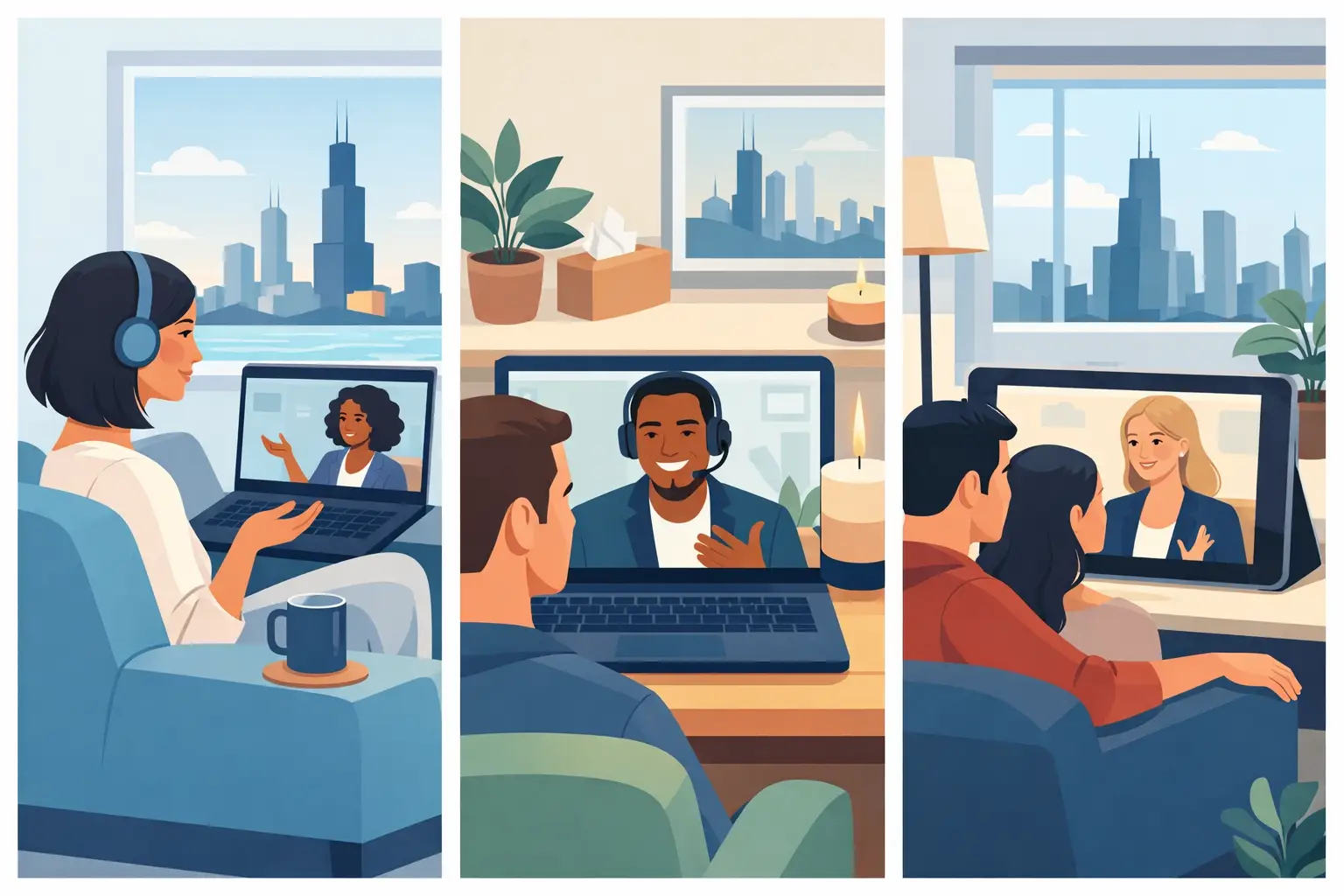
A busy Chicago week can fill quickly – work meetings, family responsibilities, commuting, and the everyday moments that call for your attention. Virtual therapy Chicago adults can access offers a caring space to pause, reflect, and receive support from a setting that feels comfortable and private. For many people, that setting is home. For others, it may be a quiet office, a parked car, or another confidential location that supports focus and ease.
Therapy can be a meaningful part of emotional wellness at many stages of life. You may be building stress-management skills, seeking support for a mental health condition, strengthening relationships, processing a life transition, or simply making more room for your own well-being. Virtual care makes it easier to bring that support into your routine with dignity, flexibility, and a person-centered approach.
What virtual therapy can look like
Virtual therapy is a scheduled conversation with a qualified mental health professional through a secure video platform. The experience is structured around your goals, your preferences, and the areas of life where you would like support. Sessions may include thoughtful conversation, practical coping tools, reflection exercises, and plans that help you carry insights into daily life.
The heart of therapy remains the relationship. A caring provider listens closely, helps you identify patterns, and works with you to create a path that feels relevant to your life. Video sessions simply offer a flexible way to meet. Many adults appreciate the ability to settle into a familiar environment before a session begins and return to their day with less time spent traveling.
Privacy is an important part of that experience. HIPAA-compliant communication helps protect your personal health information, while a private space of your choosing can help you speak openly. Headphones, a closed door, and a few quiet minutes before your appointment can create a supportive session environment.
Why Chicago adults choose virtual therapy
Chicago is a city of distinct neighborhoods, varied schedules, and changing seasons. A virtual appointment can fit comfortably into life across the city and nearby communities, including Des Plaines, Rosemont, Elmwood Park, Harwood Heights, and Norridge. It gives adults another welcoming way to connect with care while honoring the demands of work, caregiving, school, and personal commitments.
Convenience is only one part of the value. Virtual therapy can also make it easier to keep wellness support consistent. When therapy has a regular place in your week, you can build on previous conversations, practice new skills, and notice progress over time. That steady connection can support resilience during periods of change and growth.
For first-time therapy seekers, virtual sessions can feel especially approachable. You do not need to have every detail figured out before reaching out. A guided intake helps clarify what you are looking for and connects you with an appropriate service path. Beginning with a simple conversation can bring clarity and help you move forward with confidence.
Choosing a format that fits your life
Virtual and in-person therapy both offer valuable paths to care. The best choice depends on what helps you feel most present, comfortable, and supported. Some people value the familiar surroundings and scheduling flexibility of virtual sessions. Others enjoy making a dedicated trip to an office as part of their wellness routine. Many adults appreciate having options as their schedules and preferences evolve.
Consider your daily rhythm. If you have a dependable private location and enjoy meeting by video, virtual care may be a natural fit. If you feel energized by face-to-face connection in an office setting, in-person therapy may feel more aligned. Your preferences matter, and they can be part of the conversation during intake.
Technology also plays a role. A reliable internet connection, a device with a camera and microphone, and a quiet place for sessions help create a smooth experience. You do not need advanced technical knowledge. A clear appointment process and supportive communication can make getting started feel simple.
Preparing for a meaningful online session
You can approach a virtual therapy appointment the same way you might prepare for an important conversation with someone who is there to support you. Give yourself a few minutes to arrive mentally before the session starts. A glass of water, a notebook, or a comfortable seat can help signal that this time is for you.
It can also help to think about what has been taking up space in your mind. Perhaps you want to talk about a recent experience, a relationship, sleep, work pressure, emotions that feel especially present, or goals for the future. You can bring a specific topic, or you can begin with what feels most important in the moment. Your therapist can help guide the conversation from there.
After a session, try to leave a small transition period when possible. You might take a brief walk, write down a helpful thought, make tea, or simply sit quietly. This gives you time to absorb the conversation and notice what you would like to carry into the rest of your day.
A person-centered start to care
Starting therapy is a meaningful act of self-respect. It says that your well-being deserves attention, support, and room to grow. At Ready 2 Heal, the intake process is designed to feel clear, confidential, and welcoming. The goal is to understand your needs, answer practical questions, and help you find a service path that fits.
Person-centered care recognizes that you are the expert on your own life. Your provider brings clinical knowledge, compassion, and tools that support emotional wellness. Together, you can create goals that reflect what matters to you. Those goals may involve feeling more grounded, communicating with greater confidence, building healthier routines, or finding new ways to respond to stress.
This approach also honors culture, identity, family roles, personal values, and lived experience. Everyone deserves care that feels respectful and affirming. When therapy is grounded in dignity, people can show up as themselves and participate actively in their own wellness journey.
Making room for ongoing wellness
Therapy often becomes most helpful through regular practice and honest reflection. Between sessions, you may notice opportunities to use a coping strategy, set a boundary, take a restorative pause, or respond to yourself with more patience. These moments count. Emotional wellness grows through many small, intentional choices.
There is room for flexibility, too. Some weeks may call for focused problem-solving. Other sessions may create space to reflect, celebrate progress, or reconnect with the goals that matter most to you. Your care can adapt as life changes.
If virtual therapy feels like a supportive next step, you can begin with a confidential intake and allow the process to unfold one conversation at a time. Making time for your mental health can be a powerful way to care for your present and invest in the life you want to build.