Some people know they need help but still wait weeks or months to reach out. Not because they do not care about their mental health, but because the process can feel confusing, intimidating, or too hard to manage when they are already overwhelmed. That is where community mental health support matters. It gives people a more approachable way to begin care, ask questions, and find services that fit real life.
When support is built around the community, mental health care feels less like a system to figure out and more like a door that is actually open. It becomes easier to talk to someone, understand the next step, and get connected to care without unnecessary barriers. For adults and families trying to manage stress, emotional pain, or an ongoing mental health condition, that kind of access can make a meaningful difference.
Why community mental health support matters
Mental health needs rarely show up at convenient times. A person may be dealing with anxiety while balancing work and parenting. Someone else may be living with depression but unsure whether therapy is the right fit. Another person may want help now, but assume they need a referral, a long evaluation, or a level of energy they simply do not have.
Community mental health support helps close that gap between needing care and receiving it. Instead of expecting people to navigate everything on their own, it creates a more guided and human experience. That includes clear intake, respectful communication, practical scheduling options, and care that meets people where they are.
This approach also helps reduce stigma. Many people still worry about being judged for asking for mental health support. A community-centered model responds to that fear with dignity and reassurance. It says that needing help is not a failure. It is part of being human, and support should be accessible, confidential, and compassionate.
What community-centered care really means
Community-centered care is not just about location. It is about how care is offered and how people are treated from the very first interaction.
At its best, this kind of support is person-centered. That means the focus is not only on symptoms, diagnoses, or paperwork. The focus is also on the individual’s goals, daily stressors, strengths, and preferences. Someone may want help coping with grief. Someone else may be looking for support with mood changes, trauma, or family stress. Good care does not force everyone into the same path.
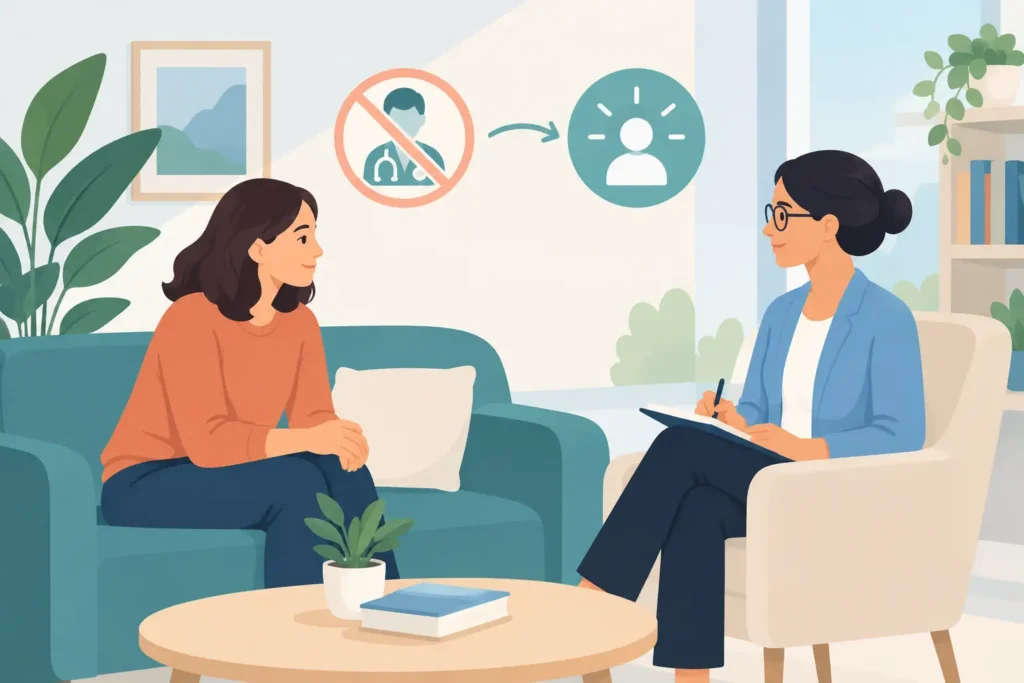
It also means accessibility is part of the service, not an afterthought. That can include faster scheduling, no referral requirement, virtual and in-person options, and a simple intake process that does not leave people guessing. For many first-time therapy seekers, this matters as much as the therapy itself. If getting started feels too complicated, people are more likely to delay care.
Signs that community mental health support may help
You do not need to be in crisis to benefit from support. In fact, many people reach out during the early stages of distress, when they notice that something feels off but cannot fully explain why.
You might benefit from care if stress is becoming harder to manage, your mood has changed for more than a few days, or daily responsibilities feel heavier than usual. Support can also help if you are feeling withdrawn, overwhelmed, persistently anxious, emotionally numb, or stuck in patterns that affect your work, relationships, or sense of well-being.
Families often seek support when they notice changes at home. Maybe communication has become tense, a loved one seems disconnected, or everyone is carrying stress in different ways. Community-based services can offer a starting point that feels less intimidating and more practical.
There is no perfect threshold for asking for help. If your mental health is affecting your quality of life, that is reason enough to reach out.
What to expect when starting care
One of the biggest reasons people delay treatment is uncertainty. They are not always sure what to expect, what kind of provider they need, or whether their concerns are serious enough.
A strong community mental health support process should lower that uncertainty. Usually, it begins with a confidential intake where you can share what you are experiencing, ask questions, and get help identifying the right service path. This step should feel guided, not rushed. You should not have to know all the clinical terms or arrive with a perfect explanation of what is wrong.
From there, care may include individual therapy, stress management support, ongoing behavioral health services, or other forms of mental health treatment based on your needs. The right path depends on the person. Some people need short-term support during a stressful season. Others benefit from longer-term care for ongoing conditions. Both are valid.
It also helps when providers offer flexibility. Virtual care can be a better option for people with transportation barriers, packed schedules, caregiving responsibilities, or anxiety about attending in person. At the same time, some individuals feel more comfortable with face-to-face sessions. Access improves when people can choose the format that works best for them.
Community mental health support and dignity
People often remember how they were treated before they remember the details of the service. That is especially true in behavioral health.
Dignity in care looks like being listened to without judgment. It means your concerns are taken seriously, your privacy is respected, and your treatment is not reduced to a checklist. It also means clear communication. When someone is already struggling, confusing systems and vague instructions can add stress instead of relief.
Confidentiality is part of dignity too. People need to know that their information is handled carefully and that communication about their care is secure. That sense of safety builds trust, and trust makes it easier to stay engaged in treatment.
For many adults and families, this is what turns a first appointment into an ongoing relationship with care. They feel seen, respected, and supported rather than processed.
The trade-offs people face when seeking support
Even with better access, real-life barriers still exist. Cost, transportation, scheduling, childcare, work demands, and fear of being judged can all affect whether someone follows through.
That is why community mental health support works best when it acknowledges those trade-offs honestly. Virtual care may improve convenience, but some people need the structure of in-person visits. Quick intake can reduce delays, but people also need enough time to feel heard. A broad range of services is helpful, but too many unclear options can overwhelm someone who is already anxious.
Good care does not pretend every barrier disappears. It recognizes that each person is balancing different pressures and tries to make the next step simpler. Sometimes the most helpful thing a provider can do is offer a clear, calm starting point.
How to choose the right support
If you are looking for care, start by paying attention to how a provider makes you feel before treatment even begins. Is it easy to ask questions? Is the intake process clear? Do you understand what happens next? Are privacy and confidentiality explained in a way that feels reassuring?
It is also worth looking for a provider that offers person-centered care rather than a one-size-fits-all experience. You want support that considers your goals, not just your symptoms. For many people, especially those seeking help for the first time, the right fit is a place that combines warmth with structure.
Ready 2 Heal reflects that kind of approach by making it easier to begin services without unnecessary gatekeeping, while offering both compassionate guidance and reliable behavioral health support.
A more human path to care
Mental health care should not feel like something you have to earn by being overwhelmed enough. It should feel available when you first notice that you are struggling, when stress is wearing you down, or when your family needs steadier support.
That is the real value of community mental health support. It brings care closer to people’s daily lives and makes help feel more possible, more respectful, and more personal. If reaching out has felt hard, that does not mean you are doing anything wrong. It may simply mean you need a path that is clearer, kinder, and built with real people in mind.