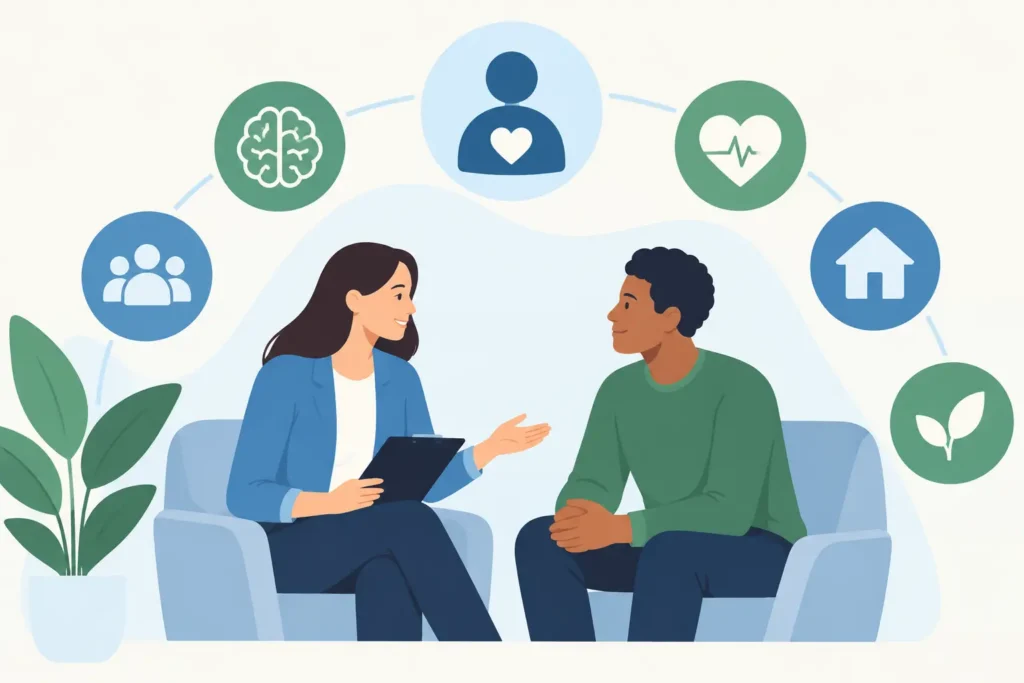

A first conversation about mental health can bring a welcome sense of direction. Case management outcomes help turn that direction into a care experience that feels personal, organized, and encouraging. Rather than focusing only on appointments, effective case management looks at what helps a person feel supported in daily life, connected to useful resources, and confident in the next step of their wellness journey.
For adults and families, this approach creates a clear path forward. A case manager learns what matters most to each person, helps coordinate services, and checks in as goals evolve. The result is care that honors dignity, strengths, preferences, and the full picture of a person’s life.
What case management outcomes really mean
Case management outcomes are the meaningful changes and milestones that show how services are supporting a person’s well-being. They may include connecting with a therapist who feels like the right fit, creating a practical wellness routine, building stronger support systems, or gaining clarity about available services.
The most helpful outcomes are person-centered. One person may value consistent virtual sessions that fit a full schedule. Another may prefer in-person support, family involvement, or assistance coordinating community resources. Each goal deserves the same respect because each person defines wellness in their own way.
This is why case management involves more than scheduling. It is a collaborative process that brings together communication, care coordination, education, and encouragement. It helps people move from wondering where to begin to feeling informed and supported throughout care.
Meaningful outcomes start with the person’s goals
A person-centered intake creates the foundation for meaningful progress. During this conversation, a care team can learn about the person’s priorities, preferred communication style, daily responsibilities, strengths, and hopes for support. Clear information helps the team recommend a service path that feels welcoming and practical.
Goals work best when they are specific enough to guide care and flexible enough to fit real life. For example, someone may want to establish a regular therapy schedule, feel more prepared for a family conversation, practice stress management skills, or connect with services that complement therapy. These goals can grow and change as the person gains new insights.
Choice matters throughout the process. When people have a voice in their care plan, outcomes can reflect their values instead of a one-size-fits-all idea of progress. This shared approach supports trust and helps care feel like a partnership.
Access to the right support
A strong outcome can be as direct as helping someone connect to appropriate behavioral health services quickly and confidently. Guided intake makes this easier by offering a welcoming place to share needs and preferences. For many first-time therapy seekers, that guidance provides valuable clarity from the very beginning.
Convenient options also support continuity. Virtual and in-person appointments allow people to choose a setting that works with work, family, transportation, and comfort preferences. Flexible access helps wellness become part of a sustainable routine.
Greater confidence in daily wellness
Progress often appears in everyday moments. A person may feel more prepared to use coping tools, communicate needs, maintain supportive routines, or make time for rest and reflection. These experiences can be just as meaningful as a completed referral or a scheduled appointment.
Case managers can help people recognize these gains by connecting goals to daily life. Regular conversations create space to celebrate what is working and identify the next supportive action. This reinforces resilience and keeps the focus on growth.
Stronger connection across services
Some care plans include therapy along with community programs, family supports, wellness education, or other helpful services. Coordination helps these pieces work together in a way that feels organized and respectful of the person’s time.
With permission, a case manager may help clarify roles, share relevant updates, and encourage communication among members of the care team. HIPAA-compliant practices help protect privacy while supporting coordinated care. People remain at the center of every decision about their information.
How case management turns goals into action
A thoughtful case management process begins by listening. The care team gathers an understanding of what a person wants from support and what resources may best match those goals. This can include discussing therapy preferences, appointment formats, cultural considerations, family involvement, and community connections.
Next comes a clear plan. The plan may outline the selected services, simple next steps, preferred ways to communicate, and times for follow-up. Plain language is especially valuable here. People deserve to understand what will happen, who will help, and how they can participate in each decision.
Follow-up is where the plan becomes a living part of care. A case manager can check whether services feel helpful, whether the schedule still fits, and whether new goals have emerged. These conversations keep care responsive and provide opportunities to adjust the path in a positive, timely way.
At Ready 2 Heal, guided intake and compassionate coordination can help community members begin care with confidence. The focus remains on accessible support, confidentiality, and a service plan that reflects each individual’s needs and preferences.
Measuring case management outcomes with care
Measurement should feel supportive, never impersonal. Numbers can be useful when they show whether people are connecting to care, attending scheduled sessions, using recommended resources, or reaching goals they chose for themselves. Personal feedback adds the context that numbers alone cannot provide.
A simple check-in might ask whether a person feels heard, understands their care options, and has the support needed for the next step. It may also explore how well appointments fit into daily life and whether the current plan continues to reflect personal goals. These questions invite honest, useful feedback.
Care teams can also review broader service outcomes, such as timely intake completion, successful connections to appropriate providers, consistent follow-up, and satisfaction with communication. When these measures are reviewed with compassion, they help organizations improve the experience for the whole community.
Privacy remains central during every stage of measurement. Health information deserves thoughtful handling, clear consent practices, and HIPAA-compliant communication. Respect for confidentiality helps people feel comfortable participating fully in their care.
When goals evolve, care can evolve too
Wellness is personal, and a care plan can grow alongside the person it serves. A goal that felt right at intake may later lead to a new priority, a different service option, or an expanded support network. This flexibility is a sign of responsive, person-centered care.
Case management provides a consistent point of connection during these transitions. It helps individuals and families understand their options, coordinate next steps, and continue building on the strengths they already bring. For people in Chicago and nearby communities, accessible behavioral health support can make that process feel more approachable.
The value of case management outcomes comes down to a simple idea: people deserve care that recognizes their goals, respects their voice, and supports meaningful wellness in everyday life. A caring conversation can be the first step toward a path that feels clear, personal, and full of possibility.