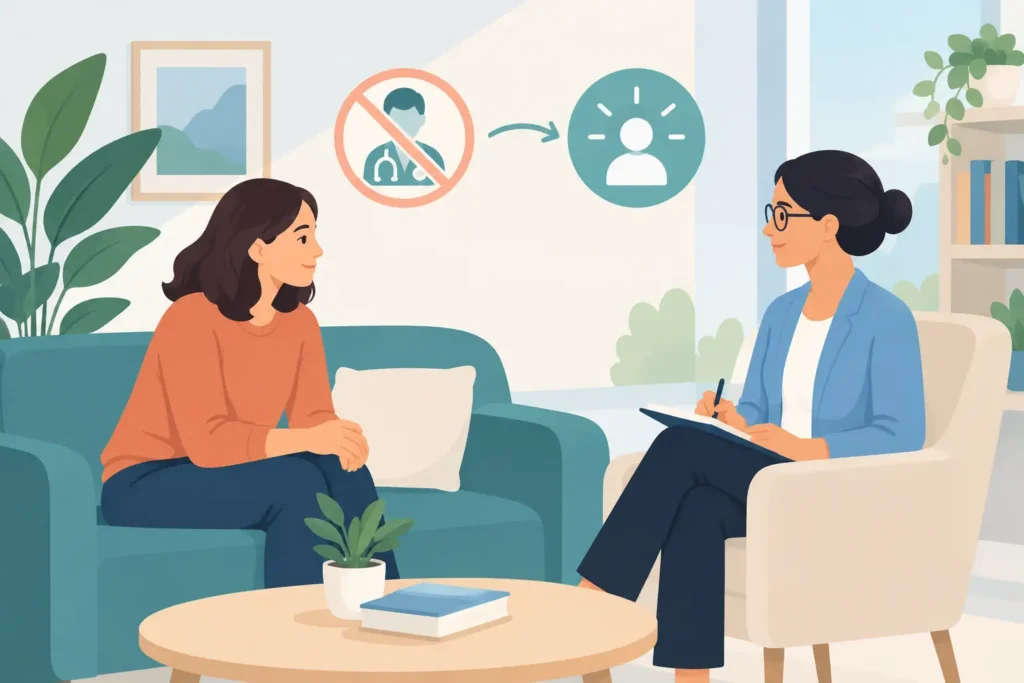

A sleepless week, a major life change, ongoing stress, or a desire for greater emotional balance can all lead someone to look for support. When you begin that search, you may see the terms behavioral health vs mental health used side by side. They are closely connected, and understanding their focus can make the path to care feel clearer, more personal, and more welcoming.
Both areas support your overall wellness. The distinction is mainly about perspective: mental health centers on emotional, psychological, and social well-being, while behavioral health includes mental health along with the everyday behaviors, routines, relationships, and choices that shape well-being over time.
What Is Mental Health?
Mental health describes how we think, feel, relate to others, and respond to daily experiences. It is part of every stage of life, from early adulthood through later years. Mental wellness can influence focus at work, connection with loved ones, sleep, confidence, decision-making, and the ability to move through change with resilience.
People often seek mental health support when they want help processing emotions, building coping skills, strengthening self-understanding, or receiving care for an ongoing mental health condition. Therapy provides a private, supportive setting to talk through what matters most and create goals that fit your life.
Mental health care may include individual therapy, family support, psychiatric services, group programs, or a combination of approaches. The right service path depends on your preferences, needs, goals, and the type of support that feels most comfortable for you.
What Is Behavioral Health?
Behavioral health takes a wider view of wellness. It includes mental health and also considers how habits, behaviors, physical health, environment, relationships, and life experiences influence the way a person feels and functions.
For example, a behavioral health provider may explore how stress affects sleep, how daily routines affect energy, how family dynamics shape emotional well-being, or how a major transition influences mood and motivation. This whole-person perspective recognizes that wellness grows through many connected parts of life.
Behavioral health services can support people who are working toward healthier coping patterns, stronger relationships, greater emotional regulation, and more sustainable routines. Care may include therapy, skill building, wellness planning, stress management support, coordination with other providers, and guidance through the intake process.
The term also appears frequently in community care settings because it reflects a broad commitment to emotional wellness, access, prevention, and ongoing support. A behavioral health center may serve individuals, families, and communities through services designed to meet people where they are.
Behavioral Health vs Mental Health: The Main Difference
The simplest way to understand behavioral health vs mental health is this: mental health is one essential part of behavioral health. Mental health focuses specifically on emotional and psychological well-being. Behavioral health includes that focus while also looking at the behaviors and life factors connected to wellness.
Think of mental health as a key part of the picture. Behavioral health looks at the full picture, including the conditions, routines, support systems, and skills that help a person feel grounded and supported.
In practice, the two terms often overlap. A therapist at a behavioral health organization may provide mental health counseling. A person looking for mental health services may find the care they need through a behavioral health center. The language can vary by provider, insurance plan, health system, or community program, yet the shared goal remains compassionate support for your well-being.
How the Two Areas Work Together
Emotional wellness and everyday life influence each other. When someone feels more supported emotionally, they may find it easier to build routines that encourage rest, connection, movement, and focus. When daily routines feel steadier, they can also create more space for emotional balance.
This is why person-centered care matters. Each person brings a unique story, culture, family structure, schedule, strengths, and set of priorities. Effective support begins with listening and then shaping a care plan around the individual, not around a one-size-fits-all experience.
A therapist may help a client identify emotional patterns, practice communication skills, create a stress management plan, and set wellness goals that fit their daily life. These areas naturally connect mental health care with behavioral health support.
For families, this integrated perspective can be especially helpful. A family member’s wellness may be shaped by caregiving responsibilities, school or work demands, relationship changes, cultural expectations, and access to supportive community resources. Family-centered conversations can create room for understanding, shared goals, and meaningful progress.
What to Expect From Behavioral Health Care
Beginning care can be simple and supportive. A guided intake helps connect you with services that align with your goals and preferences. During this first step, you can share what brings you to care, the type of support you are seeking, scheduling needs, and whether virtual or in-person appointments feel like the best fit.
Confidentiality is a central part of the experience. Health information is handled through HIPAA-compliant communication practices, helping you feel secure as you discuss personal experiences and wellness goals. A respectful care environment honors privacy, dignity, and each person’s right to participate actively in their own care.
Your provider may ask questions about your emotional wellness, relationships, routines, health history, strengths, and current sources of support. These conversations guide a personalized plan. You can also share preferences around communication style, cultural considerations, therapy goals, and practical needs such as appointment availability.
Progress often develops through regular conversations and small, meaningful steps. For one person, that may mean practicing a calming routine before a busy day. For another, it may involve expressing needs more clearly in a relationship, creating healthier boundaries, or making room for restorative activities. Care can evolve as your goals evolve.
Choosing the Right Support for You
You do not need to have every answer before reaching out. A caring intake process can help you identify the service path that fits your situation. Some people arrive with a clear goal, such as managing stress or strengthening communication. Others simply know they would value a supportive space to talk. Both starting points are valid.
Consider the kind of experience that feels most supportive for you. You may value virtual therapy for convenience and privacy, or you may prefer the connection of an in-person appointment. You may be looking for individual counseling, family support, wellness planning, or help understanding your options. A provider who offers clear guidance can make the first step feel more approachable.
It can also help to look for care that centers dignity and inclusion. The strongest therapeutic relationships are built through trust, respect, and collaboration. You deserve a space where your experiences are heard and your goals matter.
Ready 2 Heal offers accessible, person-centered behavioral health support for community members seeking a compassionate place to begin. With guided intake and flexible virtual or in-person care options, the focus stays on helping each person connect with support that fits their life.
A Clearer Path Toward Wellness
The language of behavioral health and mental health can feel technical at first, yet the heart of both is human connection. Each one recognizes that emotional wellness deserves care, attention, and room to grow.
Whether you are seeking support for a specific goal, exploring therapy for the first time, or looking for a steady partner in your wellness journey, starting with a confidential conversation can open the door to meaningful care. Your well-being is worth that first step, and support can begin with a simple decision to reach out.