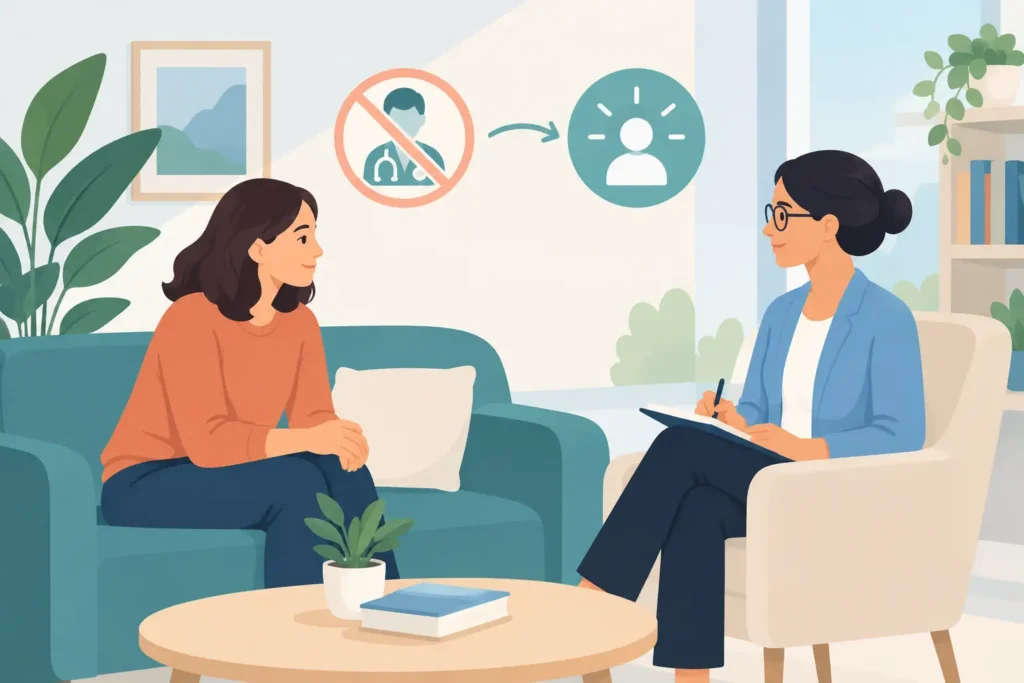

A person may spend weeks looking for the right words to describe what they are feeling. A caring response from a friend, family member, workplace, or community can make the next step feel more comfortable. The top ways to reduce therapy stigma begin with treating mental wellness as a meaningful, everyday part of caring for ourselves and one another.
Therapy is a space for reflection, growth, support, and practical tools. People seek it for many reasons, including stress management, life transitions, relationships, grief, emotional wellness, and ongoing mental health care. Each reason deserves respect. When communities speak about therapy with warmth and confidence, more people can feel welcome to explore the support that fits their needs.
Top Ways to Reduce Therapy Stigma in Everyday Life
1. Speak about therapy as part of whole-person wellness
The words we choose shape how care feels. Talking about therapy in the same natural way we discuss sleep, movement, nutrition, or routine medical care helps position emotional wellness as a valuable part of overall health.
Simple phrases can set a supportive tone: “I’m glad you are making time for yourself,” “You deserve support,” or “A therapist can help you sort through what matters to you.” These statements honor a person’s agency while recognizing the value of professional care.
This approach also makes room for many experiences. One person may want a place to process a major transition, while another may be looking for ongoing support for a mental health condition. Both are valid reasons to connect with care.
2. Let people define their own wellness journey
Person-centered care begins with listening. Rather than assuming what someone needs, offer curiosity and respect. Questions such as “What kind of support would feel helpful?” or “Would you like help finding options?” create room for the individual to guide the conversation.
People have different cultures, family experiences, identities, spiritual traditions, and preferences around care. A supportive community recognizes that there is more than one meaningful path toward wellness. Some people value individual therapy, while others may feel most at ease with family support, group services, virtual appointments, or a combination of resources.
Respecting choice is a powerful way to build trust. It reminds people that therapy is collaborative and that their voice belongs at the center of their care.
3. Share real, respectful stories of growth
Stories help make therapy feel familiar. When people choose to share their experiences with counseling, stress management, or emotional wellness, they show that seeking support can be a confident and caring decision.
The key word is choice. Personal experiences belong to the person who lived them. Invite sharing when it feels comfortable, and receive what is shared with appreciation. A response like, “Thank you for trusting me with that,” can affirm someone’s openness and strengthen connection.
You do not need a dramatic story for therapy to be worth discussing. Someone might share that counseling helped them communicate more clearly, feel more grounded during a busy season, or create healthier routines. These everyday examples help others see therapy as practical, personal, and accessible.
4. Use language that honors dignity
Dignity-centered language focuses on the person, their strengths, and their goals. It creates conversations where people feel seen as more than a diagnosis or a difficult moment.
For example, “a person receiving support for anxiety” keeps attention on the whole individual. “Someone building tools for emotional wellness” recognizes growth and resilience. This does not mean avoiding honest conversations about health. It means approaching those conversations with care, accuracy, and respect.
At home, in schools, and at work, language can invite people toward support. Consider replacing quick assumptions with encouragement. A person may be doing meaningful inner work that deserves patience and kindness.
5. Make privacy and confidentiality clear
Many people feel more comfortable considering therapy when they understand how their information is handled. Clear information helps people know what to expect and supports informed choices.
Behavioral health providers can explain their intake process, communication practices, appointment options, and privacy standards in plain language. HIPAA-compliant communication and confidential care help create a professional environment where clients can focus on their wellness goals.
Friends and family can support privacy, too. If someone shares that they are looking for therapy or attending sessions, let them decide what details they would like to discuss. Respecting that boundary communicates trust. It also reinforces that therapy is a personal space shaped by the client’s needs.
6. Make starting care feel simple and welcoming
The first step toward therapy should feel clear. Accessible care means offering straightforward guidance, compassionate intake, and choices that work with real schedules and responsibilities.
For some people, virtual therapy offers comfort and flexibility. For others, an in-person setting provides a helpful sense of routine and connection. Neither option is universally better. The right fit depends on the person’s preferences, location, technology access, schedule, and care goals.
A guided intake can be especially helpful for first-time therapy seekers. It gives people a chance to ask questions, describe what they hope to gain from support, and connect with the service path that feels appropriate. Ready 2 Heal offers direct access to this kind of person-centered behavioral health support, with virtual and in-person therapy options for community members in the Chicago area.
7. Build supportive spaces in families, workplaces, and communities
Reducing therapy stigma is not only about individual conversations. It is also about the messages people receive in the spaces where they spend their time. Families can normalize emotional check-ins. Workplaces can promote wellness resources and encourage healthy boundaries. Community organizations can make room for education, support, and compassionate dialogue.
A supportive environment does not require anyone to share private details. It simply communicates that caring for mental health is welcome here. Leaders can model this through everyday actions, such as speaking respectfully about therapy, protecting personal time, and offering clear information about available resources.
In close relationships, small moments matter. Checking in after a busy week, listening without rushing to solve everything, or offering to sit with someone while they complete an intake form can create a strong sense of connection. Support often begins with presence.
What to Say When Someone Is Considering Therapy
You do not need clinical expertise to be encouraging. A few sincere words can help someone feel supported as they consider their next step. You might say, “I’m here with you,” “You deserve a space that is focused on your well-being,” or “It makes sense to look for support that feels right for you.”
If someone asks for help finding care, focus on practical support. You can offer to help them identify whether virtual or in-person sessions fit their routine, write down questions for an intake call, or simply remind them that they can take the process one step at a time. This preserves their independence while showing genuine care.
It also helps to remember that therapy is a relationship. Finding a therapist whose approach, communication style, availability, and areas of focus align with a person’s goals can take thoughtful consideration. That care in choosing is part of the wellness journey.
A Community Culture of Care Starts With Us
Every respectful conversation about therapy can help make emotional wellness feel more approachable. It can encourage a parent to ask for support, help a friend feel understood, or give someone the confidence to schedule a first appointment.
Therapy is one of many ways people invest in resilience, connection, and a fuller sense of well-being. When we speak about it with dignity and make care easier to begin, we help create communities where more people feel supported in taking care of themselves.