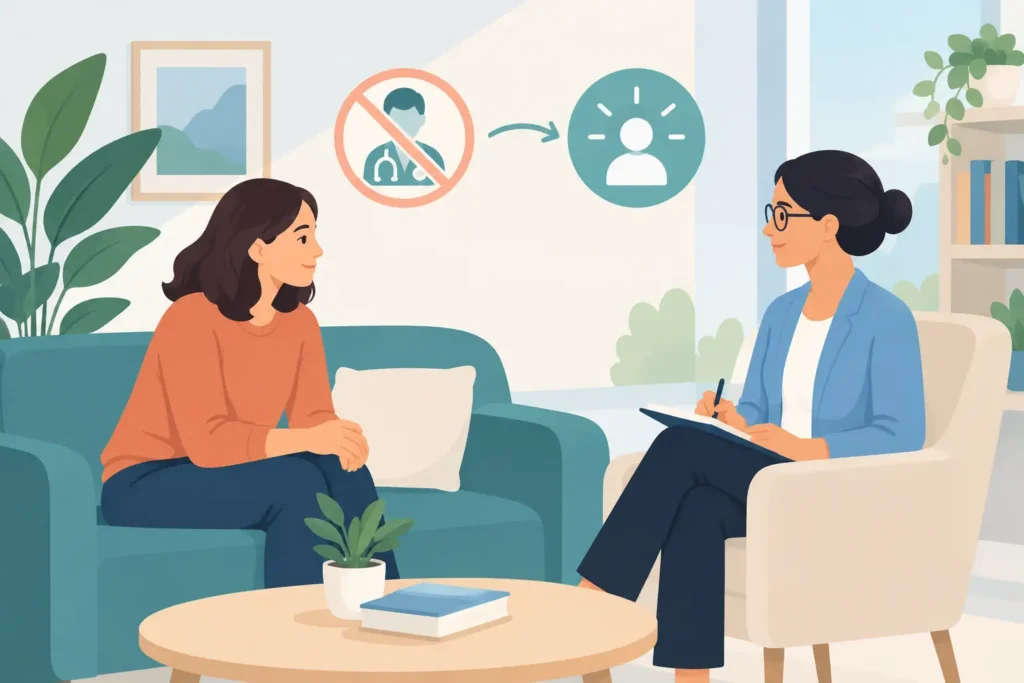

Beginning counseling can be a meaningful act of care for yourself or someone you love. If you are wondering what happens during first counseling session appointments, picture a private, welcoming conversation focused on your experiences, strengths, hopes, and the support that feels right for you. You set the pace, and your counselor helps make the path forward feel clear.
A first appointment offers space to be heard while also helping your care team understand how to serve you well. Whether you choose virtual therapy from home or an in-person visit, the purpose remains the same: creating a person-centered plan that supports your emotional wellness.
What Happens During a First Counseling Session?
Most first counseling sessions include a guided intake, a conversation about your goals, and a chance to learn how counseling can support your daily life. Many appointments last around 45 to 60 minutes, although timing can reflect the type of service and your individual needs.
Your counselor may begin by welcoming you, explaining the flow of the visit, and inviting you to share what brought you to counseling. Some people arrive with a clear goal, such as building stress-management skills or strengthening relationships. Others simply know they would benefit from a supportive place to talk. Both starting points are valuable.
This is also a time for connection. Counseling works best when you feel respected, understood, and included in decisions about your care. The first conversation gives you and your counselor an opportunity to learn about one another and begin building that partnership.
A Guided Intake Helps Shape Your Care
The intake portion gathers the information needed to match you with the right service path. Your counselor or intake coordinator may ask about your current wellness, daily routines, family and social support, work or school experiences, health history, and any counseling experiences that have shaped your preferences.
You can share as much context as feels useful during the visit. The focus is understanding your whole person, including the strengths and resources already present in your life. A counselor may ask questions such as what a more fulfilling week would look like, when you feel most grounded, or what kind of support would make the greatest difference right now.
You may also complete forms related to your contact details, health history, and service preferences. This administrative step supports accurate coordination of care. Ready 2 Heal uses HIPAA-compliant communication practices to help protect the privacy of your health information.
Your Privacy and Comfort Come First
At the beginning of care, your counselor will explain confidentiality and how your information is handled. This conversation helps you understand the privacy practices that guide your sessions and the safety-related responsibilities of your care team.
You are always welcome to ask for clarity. You might want to know who can access your information, how virtual session privacy works, or how care coordination supports your wellness. Clear answers help create a setting where you can speak openly and feel confident in the process.
For virtual counseling, choose a comfortable space where you can focus on the conversation. Headphones, a charged device, and a reliable internet connection can help create a calm, private experience. For in-person sessions, arriving a few minutes early can give you time to settle in before the appointment begins.
Sharing Your Story at Your Own Pace
A first session often centers on the concerns, transitions, and goals that matter most to you. You may talk about feeling overwhelmed, navigating a life change, managing ongoing emotional health needs, or seeking tools for greater balance. Your counselor listens with care and asks thoughtful questions to understand your perspective.
You do not need a polished explanation of your feelings. Everyday language is enough. You can begin with a recent moment, a pattern you have noticed, or a simple statement such as, “I would like more support.” Counseling is a space for honest conversation, reflection, and growth.
Your counselor may also explore the people, places, practices, and values that help you feel connected. Person-centered care recognizes that wellness looks different for every individual and family. Your cultural background, identity, responsibilities, spiritual beliefs, and personal preferences all deserve respect within your care plan.
Questions You Can Bring to the Appointment
The first session is a two-way conversation. Asking questions can help you feel informed and involved from the start. You may ask how your counselor approaches therapy, what a typical session feels like, how often appointments are usually scheduled, or how progress is discussed over time.
You can also share preferences about communication, session format, and goals. Some people value practical tools they can use between visits. Others appreciate time for reflection and deeper conversation. Many care plans include a blend of both, based on what supports your wellness best.
Turning Goals Into a Support Plan
By the end of the first session, you and your counselor may begin identifying a few priorities for care. These goals can be broad, such as feeling more connected and confident, or specific, such as creating routines that support sleep, stress management, communication, or emotional regulation.
A helpful care plan is flexible. Your needs may shift as you gain insight, build skills, and move through life experiences. Counseling can adapt with you. Your counselor may recommend ongoing individual therapy, family support, a specialized behavioral health service, or additional resources that fit your goals.
The plan may also include the next appointment. Consistent sessions can create valuable momentum, while scheduling should fit your needs and availability. For people in Chicago, Des Plaines, Rosemont, Elmwood Park, Harwood Heights, Norridge, and surrounding communities, accessible virtual and in-person options can make it easier to build counseling into everyday life.
How to Prepare for Your First Visit
A little preparation can help you arrive feeling centered. Consider taking a few minutes to reflect on what you hope will feel different with support. You may want to write down a few topics, recent experiences, questions, or goals. Bringing your insurance information and any requested intake forms can also help the visit begin smoothly.
At the same time, you can keep preparation simple. Your presence is enough. Counseling begins with a conversation, and your counselor is there to guide it with compassion and professional care.
Wear what feels comfortable, choose a time when you can give yourself some breathing room afterward, and plan a small act of kindness for yourself following the appointment. A walk, a favorite meal, quiet music, or a few moments of rest can help you honor the energy you have invested in your wellness.
The First Step Can Create Lasting Support
Your first counseling session is an opening: a chance to share your story, name what matters, and connect with care designed around your needs. Progress can take many forms, from gaining a fresh perspective to practicing a new skill or feeling more supported in daily life.
You deserve care that treats you with dignity, protects your privacy, and recognizes your resilience. When you are ready, beginning the conversation can be a powerful way to make space for your wellbeing and the future you want to build.